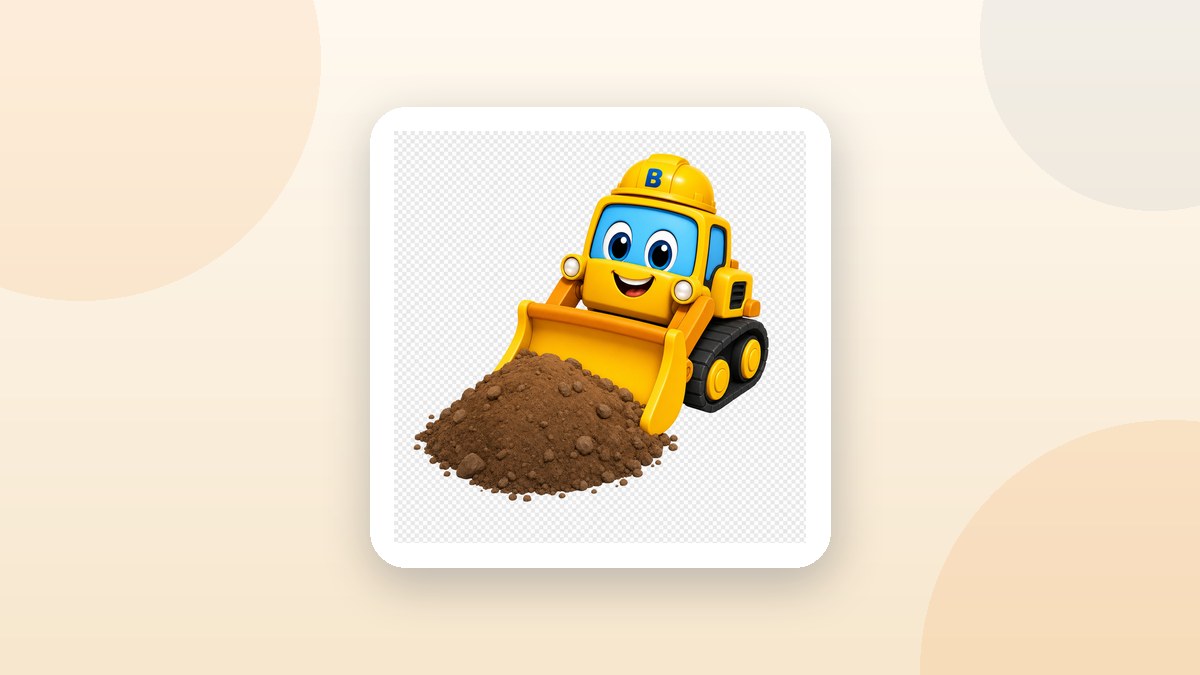
The blocks fell over. The banana broke in half. Someone else touched the yellow truck. And now your toddler is on the floor, and nothing you say is landing.
First, take a breath yourself. Meltdowns are not a sign that you are doing something wrong. Toddlers have enormous feelings and a brain that is still years away from being able to manage them alone. When your child melts down, they are not giving you a hard time. They are having a hard time.
Here is the good news for truck families: the same things your child loves about construction, the pushing, the hauling, the slow heavy work, are some of the best calming tools there are. Big muscle movement and slow, repetitive play genuinely help little bodies settle.
One honest note before we start. These activities work best for everyday big feelings, and most work better slightly before the full storm hits, when you can feel it building. In the middle of a total meltdown, your calm presence matters more than any activity. Stay close, stay steady, and bring these in as your child begins to come back to you.
1. Dump Truck Breaths
This one turns deep breathing into a game your toddler already understands.
Sit together and pretend your hands are a dump truck. Scoop up a big load of air as you breathe in slowly. Hold it for a second while the truck drives to the dump site. Then tip your hands over and let the whole load out with a long, slow breath. Add a rumbly truck sound on the exhale. The sillier the better.
Slow breathing is one of the fastest ways to calm a revved-up body, but telling a toddler to "take a deep breath" rarely works. Making it a truck makes it play, and play is a language they speak even when they are upset.
Simple idea: Do three loads together. You breathe too. Your calm breathing does half the work.
2. Heavy Hauling Jobs
Give those big feelings somewhere to go: into big muscles.
Load a laundry basket with a few board books, blocks, or stuffed animals, and give your child a delivery job. "Benny needs these blocks moved to the couch. Can your truck haul them?" Pushing, carrying, and pulling heavy-ish things gives little bodies deep pressure feedback, and that kind of heavy work is naturally calming and organizing for most kids.
It also gives an upset toddler something to do with all that energy, which beats asking them to hold still.
Simple idea: Keep the loads light enough to move but heavy enough to feel like real work. Two or three deliveries is usually plenty.
3. Build a Break Spot
Every construction site has a place where the trucks park when the work day gets too big. Your house can have one too.
Pick a corner with a pillow or a small blanket, a favorite truck or two, and a book. Call it the Break Spot, or the truck garage, or whatever name your child likes. This is not a time-out and it should never feel like punishment. It is a cozy place where a little builder can go when everything feels like too much, ideally with you nearby or right beside them.
The magic is in setting it up together on a calm day, before you need it. Practice "parking" a truck there when everyone is happy. Then, when feelings start rising, the spot already feels safe and familiar.
Simple idea: Let your child choose which truck lives in the Break Spot. Ownership makes them far more willing to use it.
4. The Slowest Truck in the World
Fast bodies calm down through slow movement, not through freezing.
Put a strip of painter's tape or a scarf on the floor as a road, hand your child a truck, and give them one challenge: drive it to the end of the road as slowly as a truck can possibly go. Slower. Even slower than that. Narrate it like a race announcer calling the world's slowest race.
Moving slowly on purpose takes real concentration, and that concentration gently pulls a toddler out of the storm and back into their body. It usually ends in giggles, which is its own kind of reset.
Simple idea: Take turns. Your child judges whether your truck went slow enough. Being the judge is half the fun.
5. Color the Feelings Out
Once the storm has mostly passed, coloring is a lovely way to land.
The steady back-and-forth of a crayon is quiet, repetitive, and soothing, and a truck coloring page gives your child a friendly place to put their attention. Sit together. You do not need to talk about the meltdown. Just being calm side by side tells your child the storm is over and you are still here.
If they press hard with the crayon at first, let them. Sometimes the feelings come out through the crayon before the picture gets gentle.
Simple idea: Keep a couple of printed pages in a kitchen drawer so a calm-down page is always ready without a search.
Keep a calm-down page ready
Grab the free Tiny Titans Calm-Down Kit and tuck it in a drawer for the next big-feelings day.
Get the Free Calm-Down Kit →What to say while you do all of this
Words matter less than tone, but a few simple lines help. Try "That was a big feeling," or "You really wanted that truck," or "I am right here." Short, warm, and true. Skip the lesson until much later, or skip it entirely. A toddler mid-storm cannot learn. A toddler who has been helped through a storm learns something better: feelings are survivable, and you are safe to have them with.
That is the heart of everything we make at Tiny Titans. Big jobs on the outside, big feelings on the inside, and a grown-up nearby who gets it.
Quick questions from parents
What if my child refuses every activity?
Totally normal, especially mid-meltdown. Do not push. Stay close, stay calm, and try again as the storm fades. Some days your quiet presence is the whole activity.
Are meltdowns at this age normal?
Yes. Frequent big feelings are a healthy, expected part of being two, three, and four. If meltdowns feel extreme, last a very long time, or you are worried, trust your gut and talk with your pediatrician. You know your child best.
Should I use these during the meltdown or before?
Mostly before and after. Dump Truck Breaths and Heavy Hauling work well when you feel a storm building. The Break Spot and coloring shine as the storm passes. In the eye of it, your calm matters most.
Little builders feel big things. That is not a problem to fix. It is the whole reason Benny and the Tiny Titans crew exist: friendly faces that help kids practice courage, patience, and trying again.
Meet the crew on the Meet the Crew page, or start with a free coloring page for your next quiet moment together.